






Mitigating potential price increases
Ensuring the Plastic Packaging Tax does not impact your costs
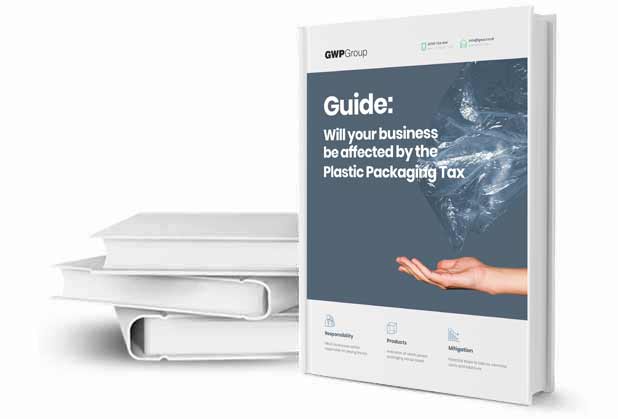
If you are reading this article, you are likely already familiar with the Plastic Packaging Tax.
In a nutshell, the tax, managed by HMRC, will be applied to all plastic packaging products with less than 30% recycled content at £223.69 per tonne*. This includes bioplastics and other compostable and biodegradable plastics, and will be paid for by packaging importers or manufacturers.
In this guide, we’ve highlighted five ways you can avoid or reduce the impact of the tax on plastic packaging. We’ve included your options for changing materials, any considerations for reusable packaging, strategies for reducing overall packaging use, and several other ideas worth exploring.
*This price is correct as of 23rd December 2025, and is subject to change.
Contents
Introduction
How the packaging tax may affect your business
The UK government has made it clear that only importers and manufacturers of plastic packaging will be liable for the Plastic Packaging Tax, and not end users. So you could be forgiven for thinking that this will not affect your business.
This is likely to be incorrect, however.
Those who will have to pay the tax may decide to pass on at least some, and potentially all, of the additional costs that they incur. There was even a section in the original legislation (since removed) that required all invoices for affected products to show the Plastic Packaging Tax surcharge.

So this is one way that the cost of your plastic packaging could increase. Another is that demand for recycled material could increase significantly, driving up the demand for these products. This scenario would also likely see the government further raise taxes on non-recycled and virgin plastics, making them less attractive from a pricing perspective.
So, even if you are not likely to pay the tax directly, and the majority of UK businesses won’t, any plastic packaging products you use which do contain at least 30% recycled material are leaving you exposed to potential price increases.
Options businesses have to mitigate these costs
So, with inflationary pressures already causing headaches for businesses, what can you do to combat the (likely) rising cost of plastic packaging?
Well, there is a range of different strategies and options available to you. These include:
- Change the products that your business uses (to include recycled content).
- Switch to corrugated board or paper-based packaging.
- Switch to reusable packaging.
- Reduce your overall packaging use.
- Think outside the box.
Throughout this guide, we’ll cover each of these strategies in further detail, helping you determine whether they would be suitable for your business to combat any adverse effects of the tax.
Use packaging with recycled content
Switch to plastic packaging that has recycled content
Perhaps the most obvious solution to avoid cost increase caused by the Plastic Packaging Tax is to switch to equivalent products that use at least 30% recycled material.
A good example of this would be using Stratocell or similar foam end caps that qualify under that legislation (this would potentially include being single-trip, used only within the UK, and being the largest component of the packaging by weight – see all qualifying criteria here).
It would be a relatively straightforward switch to begin using Stratocell R or Ethafoam HRC, both of which are polyethylene foams with a high recycled content (minimum 65%). This would not only help you avoid additional charges related to the new tax, but also help your business minimise the environmental impact of your packaging.
This principle could apply to nearly all of your plastic packaging.

There are a couple of notes of caution here, however. Firstly, due to the manufacturing processes and the higher costs of recycled plastic materials (compared with virgin plastics), these recycled options are often more expensive than their standard equivalents. This means that there may be no cost savings, even after a Plastic Packaging Tax surcharge.
Secondly, as demand for recycled packaging products grows, if supply can’t keep up, the price of these alternatives may also rise.
As such, if you are focusing solely on costs (excluding environmental considerations), then constant market monitoring would be required.
Switch to corrugated or paper-based packaging
Can your packaging be replaced with paper-based alternatives?
An alternative to switching to recycled plastic packaging is to switch to a different material altogether.
In fact, even before the Plastic Packaging Tax was announced, many businesses (driven by consumer demand and the exposure of plastic pollution by documentaries such as Blue Planet) were already switching to paper-based packaging.
Using the same Stratocell example as above, foam packaging could be replaced with corrugated cardboard end caps instead. Other options here could include custom fittings, Corrispring, or even paper void fill packaging.
Another, separate point to consider here is that corrugated board can also have a degree of water resistance added through Liquiguard coating. This brings its performance much closer to that of plastic.
None of these options would be subject to the new tax.

There are a few points to bear in mind here, too, however.
For starters, it is often not as simple as replacing one material with another. Whilst corrugated cardboard can be engineered to provide very high levels of transit protection, it takes an experienced and knowledgeable designer to do so.
Besides this, some products are so fragile or valuable that they require the absolute highest levels of protection (which foam or other plastic materials can provide). In these cases, the costs of any damage incurred during transit would far outweigh any additional costs from the new packaging tax.
Similarly, switching to recycled plastic may contribute to inflated prices by increasing demand for corrugated or paper-based packaging.
Regardless, moving to paper-based packaging is not only one of the best ways to mitigate cost increases but also to significantly improve the sustainability of your packaging.
Switch to reusable packaging
Returnable transit packaging to replace single-trip trip
Returnable transit packaging (such as Correx totes and Euro containers) will be subject to the new tax because it is part of the supply chain. Which makes it seem like an odd inclusion in a guide about avoiding the plastic packaging tax.
However, if your business uses a lot of single-trip packaging in your supply chain, switching to reusable packaging could help reduce the ongoing impact.
This is because, due to their ongoing reuse, any additional costs imposed by the tax will spread over a long period (the longevity of these products ensures low “lifetime” costs, which the tax would have little impact on).

Whilst a move to returnable packaging often sees companies replacing corrugated boxes with durable plastic alternatives (which may seem to run counter to the goals of the packaging tax), what is usually overlooked is the range of sundries and other consumables used throughout the supply chain.
For example, plastic bags (including those which are ESD-safe to protect electronics) could be replaced with specialist divisions placed within the outer containers.
Even plastic films used to protect delicate surfaces could be replaced with dividers made from materials like bubble board, which can be used for many hundreds of uses (and has special surface laminates to provide the required protection).
Admittedly, this will only be an option for certain types of businesses (typically those in B2B spaces, rather than direct-to-consumer, where there is no easy return transport available). Still, it should be a consideration where available.
Reduce overall packaging use
Minimising rather than eliminating the use of plastics
The majority of the options detailed in this guide so far have focused on eliminating plastic packaging that falls within the scope of the tax, either by using recycled alternatives, different materials, or products that are (or may be) exempt.
Another option, however, is to reduce the amount of plastic packaging your business uses.
For example, plastic void fill (such as foam or other dunnage) is often added to oversized boxes to ensure the contents are safe during transit. So, if the outer corrugated boxes were optimised to be more space efficient, less plastic “infill” would be used (reducing your exposure and overall costs).

In fact, optimising your packaging in this way can have several other cost benefits. Less material used overall, less storage space required, typically quicker packing times (and increased productivity), and much improved transit efficiency. This last point, in particular, will not only reduce your costs but also significantly reduce your carbon footprint over time.
It is here that we would normally raise a number of counterpoints or considerations regarding the detailed strategy, but in this case, there really aren’t any. As long as you choose to work with an experienced, knowledgeable packaging designer and supplier, there are only benefits to analysing and optimising your packaging.
Thinking outside the box
Other ways that you can reduce your use of plastic packaging
Finally, there may be other tactics or ideas you can use to reduce your plastic packaging use.
For example, you might be able to incentivise customers to collect products in store, rather than have them delivered. This could be through delivery charges, vouchers, and the like, which are given when collecting items. This could help reduce the use of secondary packaging, such as plastic void fill and poly mailers, used for deliveries.
The use of collection lockers might also allow you to reduce the amount of packaging you require, as it would mean goods are subjected to fewer touchpoints in the delivery network.
Schemes to encourage consumers to return plastic packaging to you for reuse may also be worth exploring, depending on how the final legislation treats reusable items.
Whilst these final ideas may be the most difficult to implement, it is certainly worth exploring all avenues.

Summary
Avoiding or mitigating the costs of the Plastic Packaging Tax
Whether you will be directly paying the Plastic Packaging Tax or not, its introduction in April 2022 has the potential to impact your costs.
As such, it makes sense to start auditing your packaging inventory now and to take appropriate steps to limit your exposure to potential price increases.
At GWP, as experienced packaging manufacturers, we can help with several of these strategies. This includes switching to different materials, packaging optimisation and reduction, and much more besides.
So, if you would like to see how GWP can help avoid or reduce the impact of the tax on plastic packaging, please don’t hesitate to get in touch.
About the author

David is responsible for driving improvements in sustainability at GWP and the wider Macfarlane Group, having previously performed a similar role for Zero Waste Scotland.
Important note
Due to the sensitive and regulated nature of the topic this guide addresses (eco-friendly packaging) we have taken extra steps to ensure its accuracy and reliability. You can find out more in our content policy.
All information is, to the best of our knowledge, accurate and correct at the time of publication. Please also note that, as all scenarios vary, not all information contained in this guide may apply to your specific application. There may also be specific regulations or laws, not covered within this particular guide, that apply. Please view the list of sustainable packaging regulations for further details.
Share this article
Further reading

Featured products



Get in touch
For full details on how GWP treats your data, please view this Privacy Policy. Your info is not shared with any third party.
Related guides
A beginner’s guide to the Plastic Packaging Tax
HMRC plastic tax legislation – products affected
What is the packaging Extended Producer Responsibility (EPR)?
Extended Producer Responsibility (EPR) fees explained
EPR reporting – what packaging data does the new scheme require?
Packaging Waste Regulations quick guide (2026 update)
Packaging (Essential Requirements) Regulations 2015
Recycling symbols on packaging – explanation and free icon downloads
Recycling Assessment Methodology: What it means for your business
Packaging terminology: A glossary of terms and conditions
Polystyrene alternatives: should you be using them?